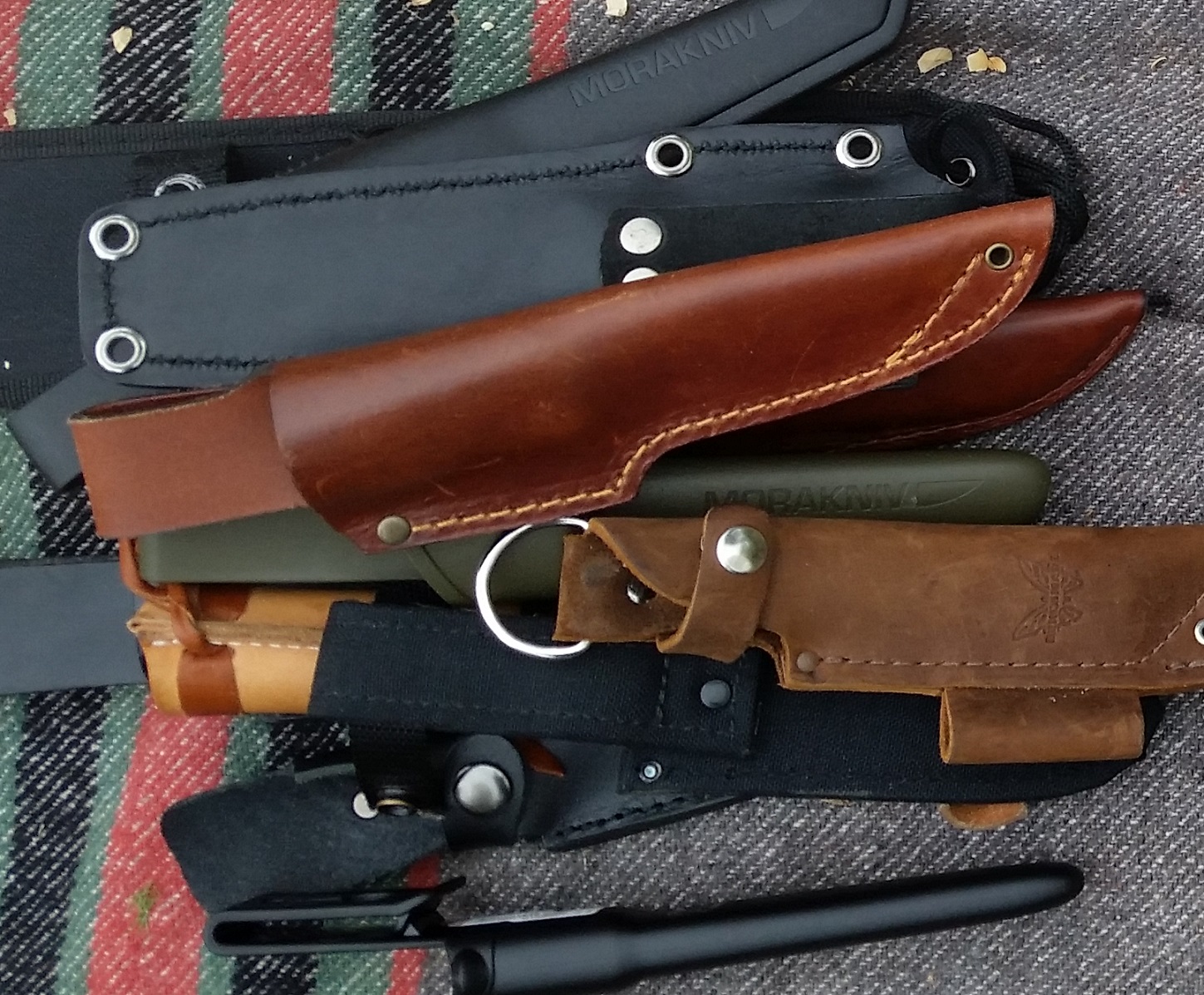
Our beloved edge tools

Hello!

You are right now visiting the knife blog called Knives - Tools & Art, witch I started back in 2011. Until 2019 this blog was very active. But after that we, Jonas Vildmark Bushcraftcenter, turned to our Facebook page called Edge Tools to publish our stuff focusing on news, info and inspiration on tools like knives, axes and saws.

Jonas Vildmark Bushcraftcenter offer classes on subjects like Bushcraft, Survival, Jägarexamen and Motorsågskörkort

At our website Jonas Vildmark Bushcraftcenter you can find out more about our tools and classes. There you can also find our new blog that can be of interest for you guys that like to know more about our life in the outdoors and the tools we bring.

But Knives - Tools & Art will stay here for now, to be used as an encyclopedia on tools we tested between the years of 2011 and 2019.


Take care

Kind regards

Mr. Jonas Landolsi

Chief Instructor

Jonas Vildmark Bushcraftcenter


På Svenska

Säteryxan from Säters Yxfabrik - The Sater Axe

We crossed the fantastic history path of The Säter Axe (Säteryxan) when Jonas found an old and rusty axe out by the cabin and started to restore it. The cabin is built back in 1803 for the Village Black Smith in Gottröra and this place have a inspiring history. You can see more about the restoration of the axe by clicking HERE.
Below you'll find some general information about the Säter Axe. Please don't hesitate contacting us if you have any additional information that can help us gather correct information about the Säter Axe and it's history.


Photo: The cover of the Säter Axe catalog from 1935


The Axe Factory
The history of the Säter Axe Factory started in 1894 by Björshyttan 7 kilometers outside the town of Säter. In 1902 the company Säters Yxfabrik AB was founded by the businessman Mr Carl Rundqvist. In 1907 the production moved into a new facility inside Säter. Since the production was put down in 1966 the Säter Axe Factory building still stands on the same spot as a landmark of an fantastic era in axe history. You can see the beautiful building when passing on Road 70 trough Säter. Today it houses a cinema museum. After closing down in Sweden in 1966 the forge was bought by the Norwegian company Mustad who moved production to Norway, carrying on the Säter Banko, Säterpilen and Mustad Banko brands.  In 1971 Mustad was bought by Øyo who continued the Säterpilen and Øyo Mustad Norway brand until 1974. After 1974 they consolidated the brand under the name Øyo Norway and are still offering axes and knives. Read more about Øyo's history starting 1860 by clicking HERE.

Model Denominations 
When studying the Säter Axe product catalogs from the start up until the 60's you notice a number of classic patterns that stuck around. Often the denomination of the axes started with a model number followed by a hint of usage (for-instance Cleaving Axe or Carpenters Axe) finishing of with a geographical denomination (for-instance Umeå Model or Turpentine Model). Some axe model names was some-what exotic, probably to attract both Swedish and foreign customers. This as the Säter Axe also was well appreciated outside Sweden.

Stamps 
The Säter Axe have used a number of variations of stamps in the axe head over history. But generally can be said; until around 1920 the Axe Factory in Säter used a stamp showing a gnome holding a hammer and an axe. The stamped logo; Säter Banco (or Banko) started to be used during the 1920's and continued up until closing in 1966, even though the company also started to use a stamp showing a Moose and the two arrows of Säter. The word BANCO probably don't have any meaning, other than that is sounded good. A number of forges used the denomination BANCO during  this era, for-instance the Igelfors Liesmedja.


Photo: From traditional-tools.com


The Production Technique
The forging of the Säter Axe was very interesting as they kept to the old and special technique of inserting (laminate) a hardened piece of steel at the edge of the axe; hold together by the softer iron of the axe head. A bit like the technique of the knife manufacture Morakniv at the time. Around 1960 the Säter Factory also shifted into full metal axe heads just as the rest of the Swedish axe manufactures had done long before them. One of the reasons for this was the lack of professional black smiths.


Photo: Label description inside the 1935 catalog


Documentation 
The Technical Museum (Tekniska museet) made a thurow documentation of the axe factory the year after closing. And thanks to this we today have a lot of objects and documents preserved at the museum in Stockholm. By using the online service of the museum you can study some of the axes and photos from Säter. Take a look in the digital archive by clicking HERE.


The Swedish Axe
Our curiosity, love for history and old tools made the old Säter Axe that Jonas found out at the cabin the starting point of our life long project called; The Swedish Axe. The project has lead us to inspiring meetings with passionate people and interesting companies, all to gain knowledge of the high quality axes made in Sweden thought history and today. The project has so far produced a number of articles and a chance for us to spread knowledge about our axes to all our course attenders. We are grateful that the project The Swedish Axe has given us good connections at the big manufacturers; Hultafors, Gränsfors and Wetterlings, as well as good friends among the smaller Black Smiths of Sweden also producing beautiful axes but on a smaller scale.

Thanks for all of your Questions
Regarding the Säter Axe; we are humble and grateful for all of your questions that have been sent to us trough the years. There are professional axe collectors out in the world as well as locals just found and old axe that have questions for us regarding their beloved Säter Axes. We must confess that sometimes we get a bad conscious for not being able to answer you all in time. But now we hope to have found a solution in publishing more about the Säter Axe here on the web site for you in the future. So keep coming with your questions and hopefully we'll be able to get back to you sooner, perhaps not with long mails but, with an interesting link to information about the Säter Axe here on the website. So stay tuned.

Thanks for constantly supporting us in spreading the heritage of the Säter Axe by caring for your tools and stay safe when chopping wood. And if you have any stories, axes or documents you would like to share with us; you are more than welcome.

We want to send a special Thanks to Mr Chris Hinchcliffe at the Tekniska museet in Stockholm for his input to the text above.

See one of the articles about The Swedish Axe.

Follow the Swedish Axe project via Instagram and the hashtag #theswedishaxe.

Welcome to Jonas Vildmark Bushcraftcenter we offer classes on Bushcraft and Survival,


På Svenska

Casström Lars Fält Knife

Jonas Vildmark have conducted at field test with the Casström Lars Fält Knife. This is a very nice and capable knife able to handle also rougher tasks. Read Jonas magazine article on the knife inside Vapentidningen nr.2 - 2019. Also stay tuned for an update below.


Welcome to Jonas Vildmark Bushcraftcenter, we offer classes on Bushcraft and Survival,

Fixed Blades under 50 Swedish Krona

Right now I'm conducting an quite interesting test; I'm doing a knife review on 11 different fixed blade knives with a price tag under 50 SEK (5 Euro). The work is planned to boil down into an article inside an upcoming issue of the Swedish magazine Vapentidningen. With this test I want to explore examples of what the first hand market here in Sweden have to offer me in the scenario of buying a fixed blade knife on a really tight budget.


The knife models included in this review are:

Lindbloms Knives 5101, Hard Head 122005 (9,90 SEK)
Lindbloms Knives, Hard Head 2633 (19,90 SEK)
Cocraft, Clas Ohlson 41-1074 (19,90 SEK)
Lindbloms Knives, Biltema 19-761 (34,90 SEK)
Lindbloms Knives 5000, ÖoB (36,90 SEK)
Morakniv Basic 511, Jula 121528 (39,90 SEK)
Fladen Outdoor Fishing Knife 17-13, ÖoB 1001130 (49 SEK)
Stark 651 (49 SEK)
Cocraft, Clas Ohlson 41-1081 (49,90 SEK)
Morakniv Basic 546, Jula 121529 (49,90 SEK)
Hultafors HVK, Bolist 700110618 (49,90 SEK)


There are of-course more low priced knife models out there than these 11 I've chosen to look closer at. And of-course you can make very nice finds on the second hand market. These 11 knife models are easy asses-sable and offered widely at big chains like; Biltema, Jula, Clas Ohlson and ÖoB here in Sweden.

I test these knives in the roll of a Bushcrafter; camp building, sloyding, hunting and fishing.

Please revisit this post soon to see the progress. And please contact me if you have any special experiences of these 11 knife models mentioned above.
See you soon again.

Welcome to Jonas Vildmark Bushcraftcenter, we offer classes on Bushcraft and Survival,


På Svenska

Cold Steel Ultimate Hunter Orange

Cold Steel Ultimate Hunter Orange


Welcome to Jonas Vildmark Bushcraftcenter, we offer classes on Bushcraft and Survival,

På Svenska

Spyderco C122 Tenacious Black Blade

Efter en tids nyttjande av knivmodellen C136 Persistence blev jag mycket nyfiken på storasyskonet Spyderco C122 Tenacious Black Blade. Denna knivserie som består av fyra modeller: C148 Ambitious, C136 Persistence, C122 Tenacious och C142 Resilience, är en mycket trevlig kvartett för dig som söker prisvärda bruksfällknivar.


Modellen Tenacious lanserades 2009 och blev snabbt en stor favorit bland publiken. Kniven finns i dag i ett antal varianter, med eller utan, helt eller delvist, sågtandat blad. Det jag sökte i just denna kniv, Tenacious Black Blade, var en tålig och diskret arbetshäst. Det faktum att hela kniven är svart gör att den inte drar så mycket blickar till sig då den sitter på byxfickan eller västen.

Näst störst i syskonskaran av fyra gör denna kniv till en allrounder, tillräckligt stor för lite grövre sysslor, samtidigt som den fortfarande är smidig att bära. Ett av de stora plusen med dessa knivar är att du kan montera bältesclipet på fyra olika sätt, beroende på hur du vill bära din kniv: höger- eller vänsterhänt, tipup eller tipdown. Personligen föredrar jag högerhänt tipdown.


Specifikationer
Tillverkare: Spyderco, Inc. Amerikanskt företag med tillverkning i USA, Kina, Japan, Taiwan och Italien
Modell: C122GBBK Tenacious Black Blade
Bladmaterial: Rostfritt stål 8Cr13MoV
Bladlängd: 86 mm
Bladtjocklek: 3,1 mm
Bladbredd: xxx mm
Knivlängd (stängd/öppen): xxx mm/197 mm
Handtagsmaterial: Svart G-10
Handtagstjocklek: xxx mm
Bärsystem: Bältesclip
Knivvikt: 120 g
Cirkapris: 749 kr (Sverige 2017)

Observera att alla mått är uppmätta av artikelförfattaren och kan skilja från tillverkarens uppgifter.

För att se mina övriga artiklar om Spydercos produkter; klicka HÄR.


På Svenska

Hultafors Hultån Hatchet

The so popular little hatchet called Hultån is one of the models included in the Hultafors Premium Axes series. This is a nice little friend to bring when "the big axe" feels overkill or to heavy and bulky. The Hultån is also actually a pretty nice little carving axe.


To see more of my articles on Hultafors products; click HERE.

Welcome to Jonas Vildmark Bushcraftcenter, we offer classes on Bushcraft and Survival,

Silky Bigboy 2000

Silky Bigboy 2000 is a impressive folding saw. This is a saw I bring when i'm planning to stay out for a longer time in the woods. The 36 cm long blade can also handle bigger trees.

Below you can see the Bigboy to the left, all yellow and big.


Also read my other articles on Silky's products; click HERE.

Welcome to Jonas Vildmark Bushcraftcenter, we offer classes on Bushcraft and Survival,

På Svenska

Fällkniven F1 Pro

In 2015 Fällkniven launched the new knife series Pro. This series contain a sturdier version of the standard F1 knife. Let's check out the Fällkniven F1 Pro.


The development process of the Pro series started back in 2010 and the goal was to push the limits even further than the standard knife models; F1, S1 and A1. The extra durability of the Pro knives is enabled by; a thicker blade made of laminate cobalt steel, a stainless steel finger guard and a new zytel sheath. And all the above is delivered in a shock-resistant and water-proof box also containing a DC4 whetstone.


Specs
Manufacturer: Fällkniven AB, Swedish family company based in Boden Sweden with production abroad
Model: F1pro
Blade material: Stainless laminated cobalt (420J2/CoS/420J2) with a hardness of 60 HRC
Blade length: 100 mm
Blade thickness: 4,9 mm
Blade width: 28 mm
Edge profile: Convex grind
Handle material: Black Thermorun (rubber) and stainless steel
Handle thickness: 15,6 mm
Tang: Protruding broad tang
Total knife length: 216 mm
Knife weight: 171 g
Total weight (knife and sheath): 241 g
Price: 3800 SEK (Sweden 2018)


Above you can see the F1 Pro (top) together with it's older sibling the F1 (bottom).
You can read more about the F1 Pro inside the Vapentidningen No.3 - 2018.

To see more knife models from Fällkniven; click HERE.

Welcome to Jonas Vildmark Bushcraftcenter, we offer classes on Bushcraft and Survival,

Hultafors Qvarfot Felling Axe

The Qvarfot Felling Axe is one out of eight models in the new Hultafors Premium Axe series.
The Premium line will replace the Classic line. The hand forged Qvarfot consist of a Swedish made slim 26" axe handle from American hickory and a 0,85 kg heavy axe head made of Swedish steel. This full size axe is one of my favorites when it comes to robust tasks around the camp. The axe is slim yet heavy duty.


Stay tuned for more info about the Qvarfot Felling Axe on this page.


Welcome to Jonas Vildmark Bushcraftcenter, we offer classes on Bushcraft and Survival,


På Svenska

Karesuandokniven Nallo & Singi - The 2018 Update

I'm been using the updated 2018-versions of Karesuandokniven's folders Nallo and Singi for some time now. Two of the new features of these folders are since Spring 2018; a Scandi grind edge and a liner lock mechanism.


Today an mag article I've written on the Nallo and the Singi are hitting the stores here in Sweden. So please go check out the latest issue of Vapentidningen No.5 - 2018 to see more. Soon you'll also be able to read more about these updated folders here on the website so stay tuned.


To see more I've written about Karesuandokniven; click HERE.

Welcome to Jonas Vildmark Bushcraftcenter, we offer classes in Bushcraft and Survival,

How to Carry a Knife

When it comes to knife discussions we often tend to focus more on the actual knife than the sheath. Often blade steel, edge profile and knife size are more debated than the design of the sheath or pouch surrounding the knife. I think we need to focus more on the carry systems of our knives, and how we carry them, to get the most out of our tools and the experiences they enables us. Fact is that fixed blade knives and bigger folders spend their life time mostly inside their carry systems (sheaths and pouches). Now, let us dig deeper into this great and nerdy topic!


For instance; when I'm out hiking a long trail my knife spend most of it's time inside the sheath. Therefore during a long hike like this I prioritize how well my knife is fitted on to my body, rather than what type of steel the blade is made of. A lot of hikes has been disturbed by an annoying knife banging into my leg or giving me a chafe in the side. So to avoid disturbance and the risk of loosing the knife I might carry the knife inside the backpack instead.
The most important aspect when choosing my edge tool is; what kind of activities am I'm planning to do. I'll probably not gonna pick the same knife for a one day ice fishing trip as for a long mountain hike. This also goes for how I choose to carry my knife. One and the same knife I will perhaps carry in two or three different ways depending on the upcoming activity.

So even if we tend to focus more on the actual knife than it's sheath; the carry system is essential to how I experience the knife. It doesn't matter if I have a great and expensive knife if the carry system doesn't enables a comfortable and safe carry. Even so; unfortunately, knife manufacturers all over the world tend to cut down the product cost by not prioritizing the carry system as high as they should.


A high carry Kayoba gut opener and a low carry
Karesuandokniven Moose Special (also tucked into the right hand pocket)


However; luckily, there are still some knife manufacturers that take pride in making high quality carry systems for their tools. I notice this by looking at the quality of the chosen materials and how well the components are fitted and attached to each other. A big and heavy knife can actually feel lighter, compared to a smaller blade, if the maker have designed a well functioning and well fitted carry system, distributing the weight in a comfortable and well balanced way.

Another interesting aspect is the balance between how well the tool is secured in it's carry system, and how easy accessible the tool is to the user. I prefer to always have my knife close at hand and to be able to only use one hand when taking it out of the sheath, without having to open up velcro, straps and buttons. However; at the same time it's important to me that I don't risk loosing my blade out in the field if the knife sits too lose inside the sheath. Fortunately enough there are a wide range of design solutions on how to secure a tool in it's carry system. I will not get into all of these right now. However I can say that I usually prefer design concepts where it's the friction between the knife handle and the sheath that secure the knife inside the sheath.

Below follows a number of examples on how to carry a knife.

Inside the Pocket
Smaller folders I often carry loose inside my trousers pocket and sometimes inside a jacket pocket, hence the denomination Pocket Knife. The definition of a smaller knife in this case means a folder that isn't to big or heavy to bother or chafe inside my pocket. When carrying a knife loose inside my pocket it's important to calculate how big of a risk it is that the tool falls out of the pocket unintentionally. On some pockets without lid, zippers or buttons this risk can occur when being seated inside a car or when climbing, running and crawling. If that is the case; I use a longer lanyard attached to the knife in one end and to my belt at the other.


This longer lanyard (about 55 cm) enables me to pick up and use the knife usually without having to remove the lanyard from my belt or knife. I'm attaching the lanyard around my belt instead of the belt loops of the trousers, as the belt loops may brake if the lanyard get stuck on something. If I carry the knife inside a jacket the same lanyard can be attached to the jacket instead.


When I carry my knife loose inside a pocket I regularly turn the pocket inside out to shake off any rubbish from inside the pocket. I don't want this dirt to get stuck inside my knife's folding mechanism.
Some folders has a ring or a hole to attach the lanyard. Folders of the right size using a pocket clip can be attached to the same lanyard and carried inside the pocket. then the pocket clip enables you to remove the knife from the lanyard if necessary.

Pocket Clip on the Pocket
Folders equipped with a pocket clip (a flexible metal tongue) can be carried pinched on top of my pocket. This is a good way not to tear on the pocket liner (textile) and at the same time lower the risk of getting pocket dirt stuck in the folders pivot mechanism. Note that this way of carrying your blade is more visual compared to carrying the folder all the way down inside the pocket. Please show humble respect and concern when operating in a sensitive environment. Some people may be offended.


Kizer Intrepid on top of my right hand trouser pocket, tip up carry


Personally I prefer carrying my pocket clip folders tip down. Today some knife manufacturers use the clever design of offering four different set ups of holes for the user to choose and adjust how to mount the pocket clip on the knife; tip up, tip down, left or right handed. This choice is desided by how I want to grab and open my folder, especially if the folder is equipped with a one hand opening feature (thumb hole, plate or stud).


Photo: Amazon.com


An alternative usage of a pocket clip is by using a separate one, just like the one seen above. This allows for my folder to hang freely further down inside my pocket, still not touching the bottom of my pocket.

On the Belt
The most common way of carrying a knife is by letting the sheath or the pouch hang in the belt around my waist. Most fixed blade sheaths and folder pouches are equipped with a loop or one or several slits to run my belt thorough.


Mikov Hablock 220 carried on my belt, right hand side


Buck 110 together with it's pouch


The two most common fixed blade sheath designs are; high carry and low carry. Usually high carry means that the knife handle is placed almost at the same height as the belt, tip down. Low carry means that the whole knife is hanging below the belt line, tip down. Good aspects of the high carry is that the knife is secured tight against my body not risking to get stuck or slam into my surroundings. The up side of a low carry is that the knife can hang freely beneath my backpack's waist belt.


Sheahts, pouches and holsters sometimes have different designs for left or right handed carry. Either way; it's up to me where to place my knife along the belt line. This also goes for knives carried horizontal; placing the knife parallel to the belt. This is a nice way of carrying especially larger blades on my waist.


Cold Steel Master Hunter in a custom sheath made by Mr. Eric E Noeldechen.
The flexible mounting system allows the knife to be carried almost any way I want, for instance horizontal


A high carry system often can be converted into a low carry by adding a loop or a carabiner. The carabiner also allows me to easily remove the knife from my belt without having to open and remove my belt from my trouser's belt loops. A especially designed alternative to a regular carabiner is the Casström No.3 Dangler.


Morakniv Classic 2/0 in a leather sheath from the Morakniv Classic Original 1
together with a added carabiner enabling a lower carry

Casström Safari  together with the
Casström No.3 Dangler, enabling a low carry


Some people mean that the high carry placing the knife tight against the body allows for an easier one-hand grab when taking out one's knife. But in my opinion the low carry knives also can be grabbed one-hand-only by pushing the sheath forward using my thumb pulling out the knife from the carry system.
One alternative in this case can be a sheath equipped with a small hole allowing for my finger to press up the knife handle for a one handed access to my knife. One example of this concept is the Karesuandoknivens Johtalit shown below.


If I have to mention some down sides of carrying my tools on my belt is that they can be in the way when crawling on the ground, sitting down or sneaking around in the bush hunting. When ever I feel this is an issue; I instead choose to carry my tools inside my pockets, inside my backpack or hanging around my neck.
If there's ever a risk of me sitting down up on a low carry tool it's especially important that the sheath features a plastic or antler inlay for safety. I've experienced a fixed blade going through the sheath tip almost penetrating my inner thigh while I was squatting down.

On or Inside the Backpack
When carrying a bag of some sort I always have the option of carrying my tools inside the bag. This is especially interesting for occasions when the blade is not used frequently or when I'm carrying a large and heavy knife. If I want to snap up the accessibility a notch I can strap or hang my knife on the outside of my bag. This enables me to reach the tool without having to open the bag each time.


ESEE Izula-II hanging up side down from a Osprey backpack using a carabiner


When attaching tools to my bag it's important to secure the knife inside the carry system aswell as securing the carry system properly to the bag. When carrying my knife tight against my body it's easier to feel if the knife is unintentionally dropped. But when the knife is attached to my backpack it's harder for me to feel this. Examples on where to place the knife outside my backpack is; on the top lid, along the side of the bag or attached parallel on one of the carrying straps. The above also goes for when I'm attaching my knife to a jacket or a vest.


 A Morakniv Tactical strapped on front of my MOLLE vest from Snigeldesign

The same vest holding a Morakniv Pathfinder up side down on my back


Neck Knife
I like carrying my knife hanging around my neck. It's practical when carrying a not to big or heavy knife. It's especially useful when dressed for winter. The neck knife can hang outside the clothes for me not having to lift up or undress to reach my waist line. The neck knife carry is also great when wearing light pants without a belt and pockets.


Jonas Vildmark Doer  hanging around my neck. 
The carry system has an integrated long leather strap for neck knife carry


More Advantages of the Neck Knife Carry:
  • I have a good overview of my knife (safety and theft) as it's centrally placed on my body
  • I can reach my knife from both left and right hand side
  • No knife hanging from my waist risking it to get stuck or slam into object when sitting lying or crawling
  • Easy to take off or tuck inside my shirt or jacket, when needed

Some Down Sides of the Neck Knife Carry:
  • Might be in the way while carrying other tools around the neck, like binoculors
  • Need to be aware of the choking risks of carrying objects around my neck

Variants to the Neck Knife Carry
One way is to just take a regular fixed blade knife an run a cordage through the belt loop of the sheath and then hang the "neck less" around my neck with the knife tip down. I can do a fixed knot or an adjustable knot on the string. The length of the cordage should be just as long so I can apply the neck knife over my bare head. The knife should not be hanging too far down on my chest risking to get tangled or bumping into me or other objects.


Pentti Pirttioja with an leather strap added,
using an adjustable knot, tip down

Hultafors Hantverkarkniv RFR haging around Sonia's neck, 
using a nylon string with a fixed knot, tip down


Another alternative is when the fixed blade knife is so secure inside the sheath that I can mount the knife tip up without risking the knife falling out from the sheath. These carry systems are usually meant for up side down carry using materials like; plastic, Kydex or Zytel. This way of carrying offer a very quick accessible knife by just grabbing the handle and pulling downwards. This demands a high friction between knife and sheath to hold the knife secure when hanging up side down. The strap around the neck principal is the same as above only it's extra important that the cordage doesn't break when pulling down on the carry system.


A Spyderco ARK H1 hanging up side down in it's neck chain

ESEE Izula-II hanging up side down in a paracord using a fixed knot


There are also Kydex sheaths that enables friction locked up side down carry for folders, as seen in the picture below.


A great way of utilizing the neck cordage is to hook up a pocket clip folder to it. If the folder isn't too heavy this is a practical alternative to carrying the folder on my pocket.


Spyderco C11 Delica 4 Zome Green hooked onto my fixed knot neck cordage 
using the pocket clip


Other
Besides the above ways to carry a knife there are of course a wide range of alternatives like; boot dagger, shoulder holster, inner pockets, machete on the back or the diver's knife on the fore arm. These examples are all some what exotic, so therefore I wont get into these deeper than mentioning them. However; one alternative worth mentioning a bit more is the shoulder strap. This is a longer adjustable cordage enabling me to hang my knife over the neck and shoulder. This way of carrying is in a way related to the neck knife carry, making the knife reachable outside my wither clothing. In the picture below you can see my friend Jonathan Sandén carrying a typical modern bushcraft knife hanging in a shoulder strap.


Photo: Jonathan Sandén


Regardless of what carry system or in what way i choose to carry it; I always have the habit of now and then touching my knife to make sure it's still there. This is the best way to avoid loosing a good tool.

I also want to take this opportunity to emphasize how important it is to pull out your knife in a controlled and safe manor avoiding cutting oneself or others or damaging the carry system it self. I always try to keep track of my fingers and my friends when pulling out my knife and as soon as I don't use the knife; put it back in the sheath. A good rule of thumb is to always push the back of the blade against the sheath so that the cutting edge don't damage the sheath and it's straps.

Below follows some examples on how I carry my blades when out and about doing different activities.

A Long Hike
In my pants right pocket - A multi tool secured using a long lanyard (Victorinox Tinker Small)
In my backpack - A small fixed blade knife (Jonas Vildmark Doer),  an axe (Karesuandokniven Stoera Àksu) and a saw (Silky Super Accel 21)

A Short Visit in the Woods
On my belt - A multi tool in a leather pouch (Victorinox Swiss Soldier's Knife 08)
Neck knife - A small fixed blade knife (Jonas Vildmark Doer)

A Longer stay in the Woods
In my pants right pocket - A multi tool secured using a long lanyard (Victorinox Tinker Small)
Neck knife - A small fixed blade knife (Jonas Vildmark Doer)
In my backpack - A medium size fixed blade knife (Hultafors OK1), an axe (Hultafors Huggyxa Classic) and a saw (Silky Bigboy 360). If there's plans on hunting during the stay; I also bring a multi tool game knife (Mikov Fixir 232

Working at the Homestead
On my belt - A multi tool in a leather pouch (Victorinox Swiss Soldier's Knife 08)

A One-Day Hunt
On my belt - A multi tool in a leather pouch (Victorinox Swiss Soldier's Knife 08)
On my belt - A multi tool game knife in a leather pouch (Mikov Fixir 232)
In my backpack - A medium size fixed blade knife (Hultafors OK1)


are discreet and helpful friends when hunting


I hope this article was helpful and inspiring to you. Perhaps the contest may help you in future edge tool choices and how to carry your tools. If you have any feedback or questions; please don't hesitate contacting us.

Please follow your local laws regarding knife carrying and good luck carrying your tools with respect and concern to each other and our history.

Welcome to Jonas Vildmark Bushcraftcenter, we offer classes in Bushcraft and Survival,